Sikhism
What is Sikhism
Sikhism is the world’s fifth-largest religion with more than 25 million Sikhs worldwide. The Sikh Gurus, known as spiritual guides or teachers, established the religion. Guru Nanak was the first Guru and was born in the 15th century in the Punjab region of India. Sikhs believe in the oneness of all beings and the equality of everyone.
The Sikh faith is a monotheistic religion, meaning Sikhs worship one God. Guru Nanak taught that one must honor God by honoring others and the Earth, God’s creation. Nine more Gurus succeeded Guru Nanak, and continued to spread his teachings across the world. Guru Gobind Singh was the last Guru; he named the Sikh sacred text, the Guru Granth Sahib, to be the eternal Guru that would guide the Sikhs going forward.
Three core pillars of Sikhism, formalized by Guru Nanak are as follows:
Vand Chakko: Sharing with others, helping those in need, as well as participating as part of a community. A spirit of giving, sharing, and caring for one another is central to Sikhism.
Kirat Karo: Earning/making a living honestly, without exploitation or fraud, and speaking the truth at all times.
Naam Japna: Meditating on God’s name to live a life of decency and humility.
Legend of the Ten Sikh Gurus
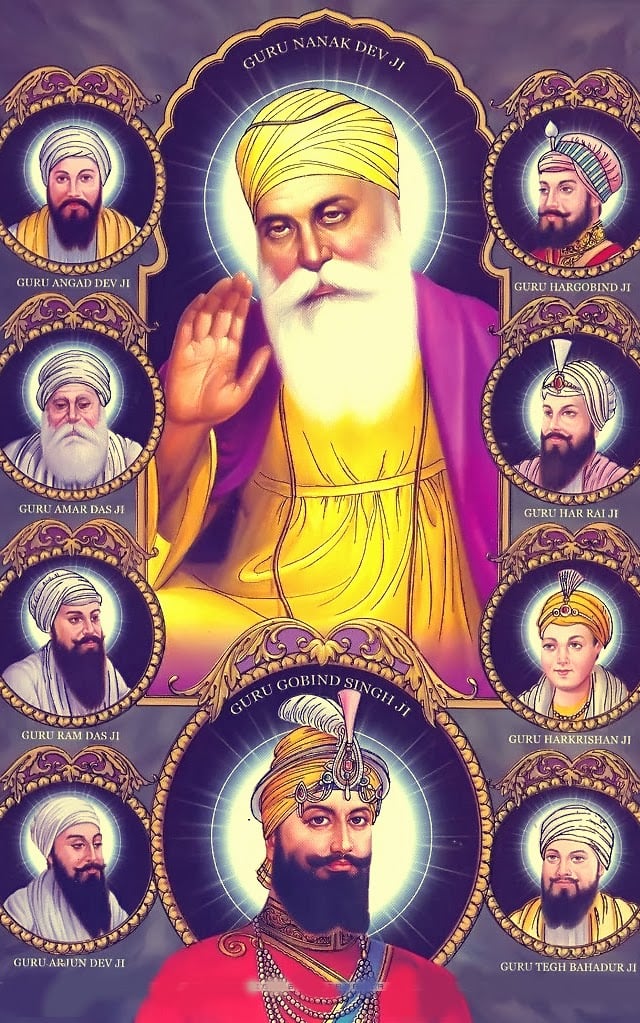
The “Gurus” in Sikhism are regarded as enlighteners and divine messengers. They were the messengers of the Timeless, who brought forth the eternal wisdom. They were universal men who freed our minds from bigotry and superstitions, dogmas and rituals, and emphasized the simplicity of the religion.
- Guru Nanak Dev ji
- Guru Angad Dev ji
- Guru Amar Das Shaib ji
- Guru Ram Das Sahib ji
- Guru Arjan Dev ji
- Guru Har Gobind Sahib ji
- Guru Har Rai Sahib ji
- Guru Har Krishan Sahib ji
- Guru Tegh Bahadur Sahib ji
- Guru Gobind Singh Sahib ji
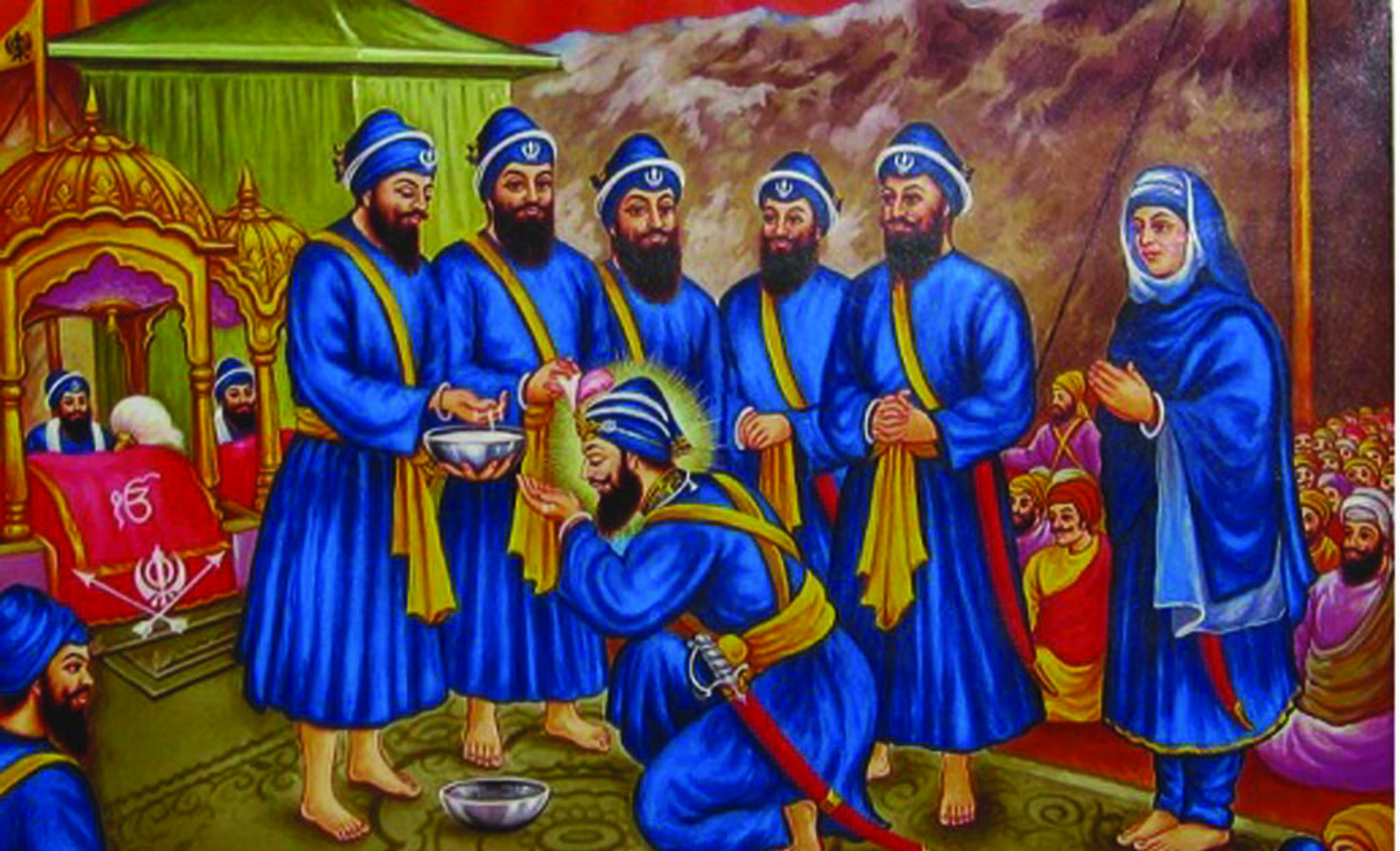
The 5 Beloved Ones
- Bhai Daya Singh ji
- Bhai Dharam Singh ji
- Bhai Himmat Singh Ji
- Bhai Mokham Singh ji
- Bhai Sahib Singh ji
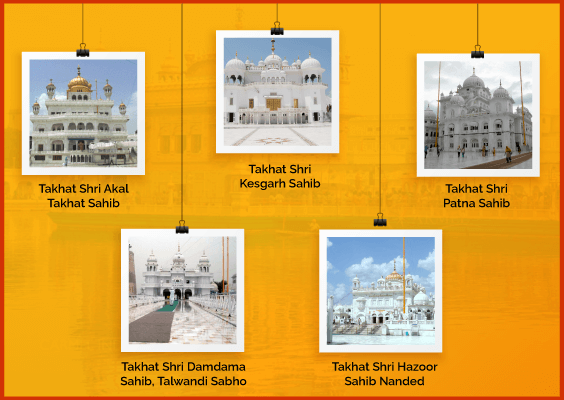
The 5 Sikh Takht Sahib
- Takhat Shri Akal Takhat Sahib
- Takhat Shri Kesgarh Sahib
- Takhat Shri Patna Sahib
- Takhat Shri Damdama Sahib, Talwandi Sabho
- Takhat Shri Hazoor Sahib, Nanded